HubSpot Spring Spotlight 2026 is centred on one clear theme: value.
The release is built around what HubSpot calls “the context advantage”: using customer data to help teams reach more buyers, close more deals, and resolve more tickets. HubSpot frames the release around three outcomes: Build Awareness, Grow Revenue, and Scale Support. For go-to-market teams, the most important message is simple. AI becomes more useful when it understands your business, your customers, and the processes your teams already run.
This is where we see the biggest opportunity. HubSpot’s new AI and automation capabilities can create real value, but the results depend on the operating model behind them. Your lifecycle stages, object structure, data quality, handoffs, reporting logic, and revenue processes all shape how useful these tools become. This article looks at the Spring Spotlight 2026 updates that are most likely to change how GTM teams plan, sell, support, and report.
HubSpot’s agentic customer platform vision is powerful because it gives GTM leaders a way to think beyond individual features. The platform is being built so that AI can work from the same context as the team: customer records, transcripts, notes, engagement history, business rules, and proven patterns from past activity.
This is the context layer inside the Smart CRM, paired with agents and applications that use that context to support marketing, sales, and service workflows.
This is where the operational value sits.
A campaign assistant performs better when ICP definitions and campaign data are already usable. A prospecting agent performs better when target account rules and persona logic are already in place. A deal progression tool performs better when stage definitions and next-step standards are consistent.
The tools are becoming more capable, but the results still depend on the quality of the system they run in.
Discovery is moving earlier, and becoming harder to measure
Buyer discovery is changing.
Traditional search still matters, but more commercial research now starts inside AI answer engines and conversational search experiences.
HubSpot has responded to that shift in two ways: helping teams understand their visibility in AI-generated answers, and helping teams plan campaigns with more context from the start.
Introducing the HubSpot AEO Tool
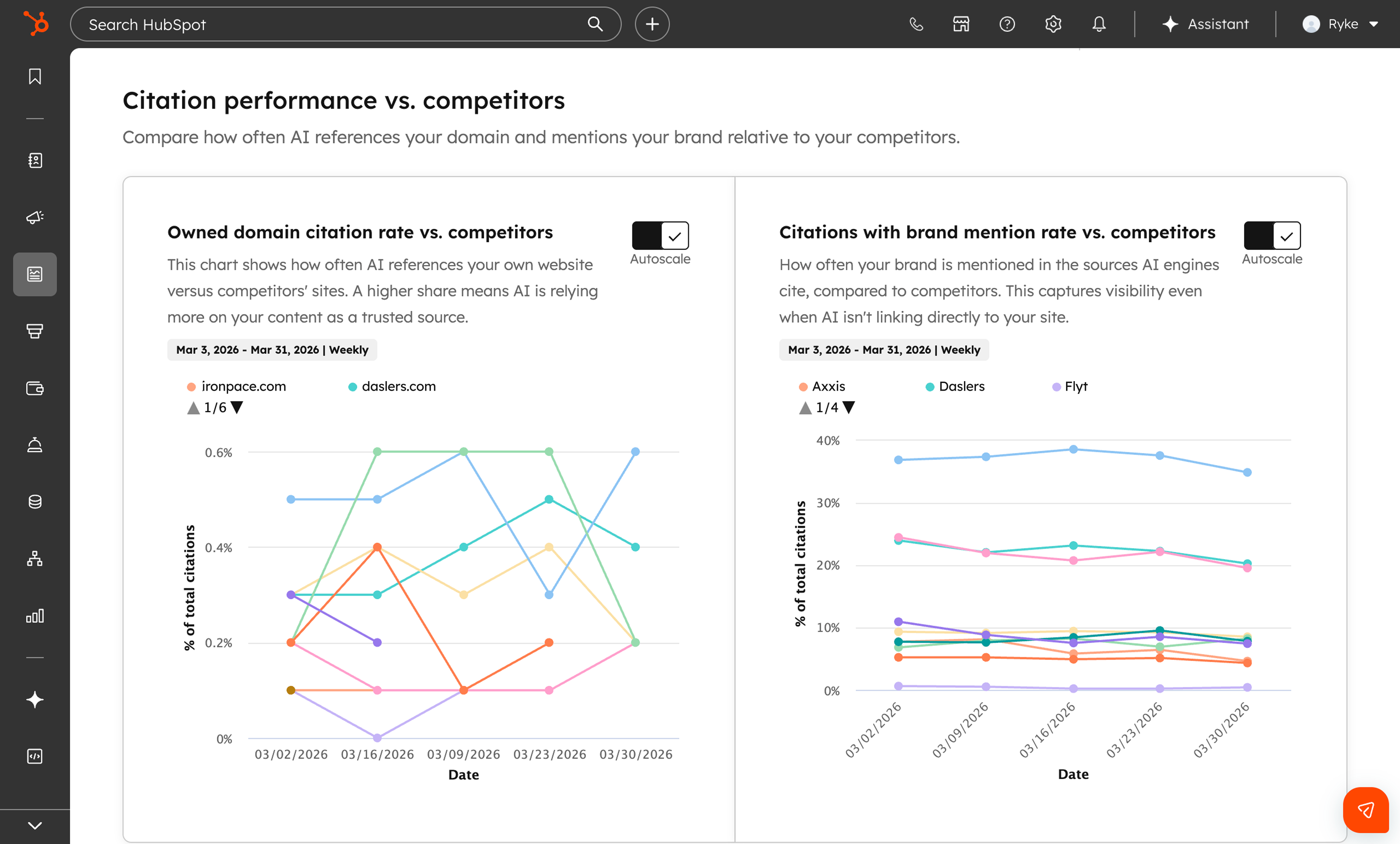
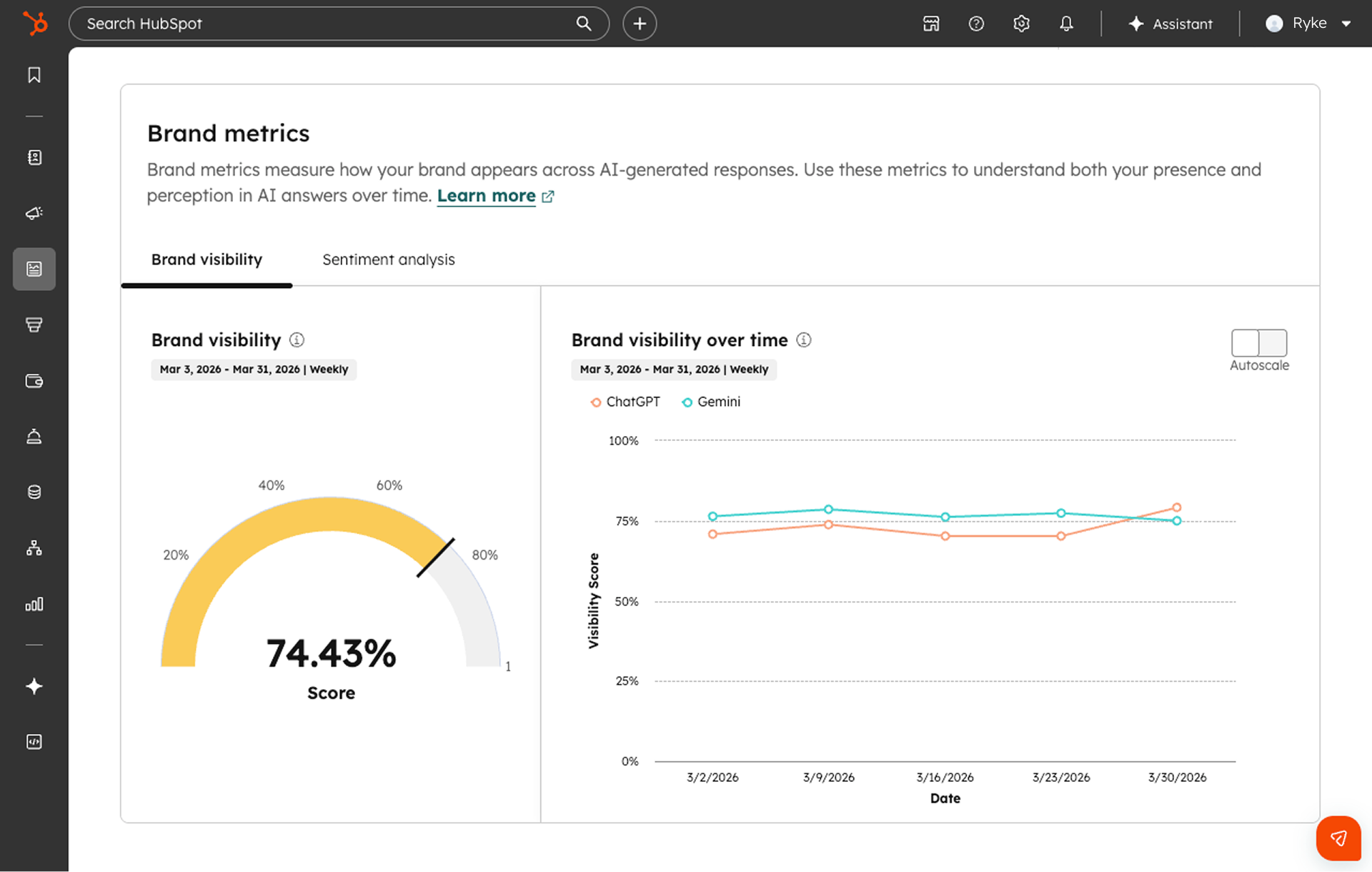
HubSpot AEO (Answer Engine Optimisation) tool helps teams measure and improve how their brand appears in AI-generated answers across platforms such as ChatGPT, Gemini, and Perplexity. The product includes prompt tracking, citation analysis, competitor comparisons, visibility reporting, and recommendations to improve presence in answer engines. HubSpot now offers AEO as part of Marketing Hub Pro and Enterprise, and also as a standalone product.
👉 To learn more about AEO, visit our post: What Is AEO? How Answer Engines Are Reshaping Search
This is one of the most commercially relevant updates in the release because it addresses a real change in buyer behaviour. Buyers are asking AI tools which vendors to consider, which platforms integrate best, which partners have experience in their industry, and which solutions are best suited to specific operational challenges. Those moments shape awareness long before a buyer fills out a form.
 Source: HubSpot
AEO is most useful when it is treated as a decision-making layer. It helps teams answer practical questions such as:
- Which prompts reflect real commercial intent?
- Where is our brand visible today?
- Which competitors are appearing more often?
- Which sources are influencing AI-generated answers?
- Which pages or topics are worth improving first?
That makes AEO valuable to teams that want to connect content strategy more directly to buyer discovery. The strongest programmes will use it to sharpen pillar pages, solution pages, comparison content, use-case content, and expert-led articles that answer the questions buyers are already asking.
 Source: HubSpot
What other marketing updates deserve attention?
What happens next after visibility matters just as much. Once teams have a clearer view of how buyers are discovering their brand, the next challenge is turning that insight into better campaign planning, stronger briefs, and more consistent execution.
Breeze Assistant for Loop Marketing sits alongside that shift in a different way. Its strongest use case is campaign planning. Because it can leverage roles, permissions, campaign data, customer context, and HubSpot Academy knowledge, it is well-suited to the part of marketing work where teams need clearer briefs, tighter audience definitions, and greater consistency from one campaign to the next. That makes it useful for teams trying to translate ICP thinking and brand positioning into campaigns that are more grounded in what the business already knows
There is also a quieter reporting story in this release that deserves attention. Connecting Campaigns to your CRM to bring attribution across contacts, deals, tickets, and custom objects into one view.
For GTM teams, that is helpful because campaign influence often shows up in pipeline movement, onboarding, expansion, and post-sale interactions across the same account. Better reporting at that level supports better decisions about where marketing is creating value across the full customer journey.
👇 Watch Derek Owens, Marketing Hub Product Manager, walk through the campaign product updates at the Dublin HUG.
HubSpot also highlighted several operational marketing updates that are easy to overlook but highly relevant for RevOps-minded teams. These include Reddit in HubSpot, TikTok Ads, TikTok publishing within the social workflow, and broader campaign management improvements.
Revenue execution improves when timing, coverage, and follow-through get stronger
Sales is where this Spring Spotlight feels the most operational.
The most significant updates are those designed to reduce the gap between seller activity and actual deal movement. In the HubSpot world, that means Prospecting Agent, Smart Deal Progression, and Buying Groups.
HubSpot Prospecting Agent
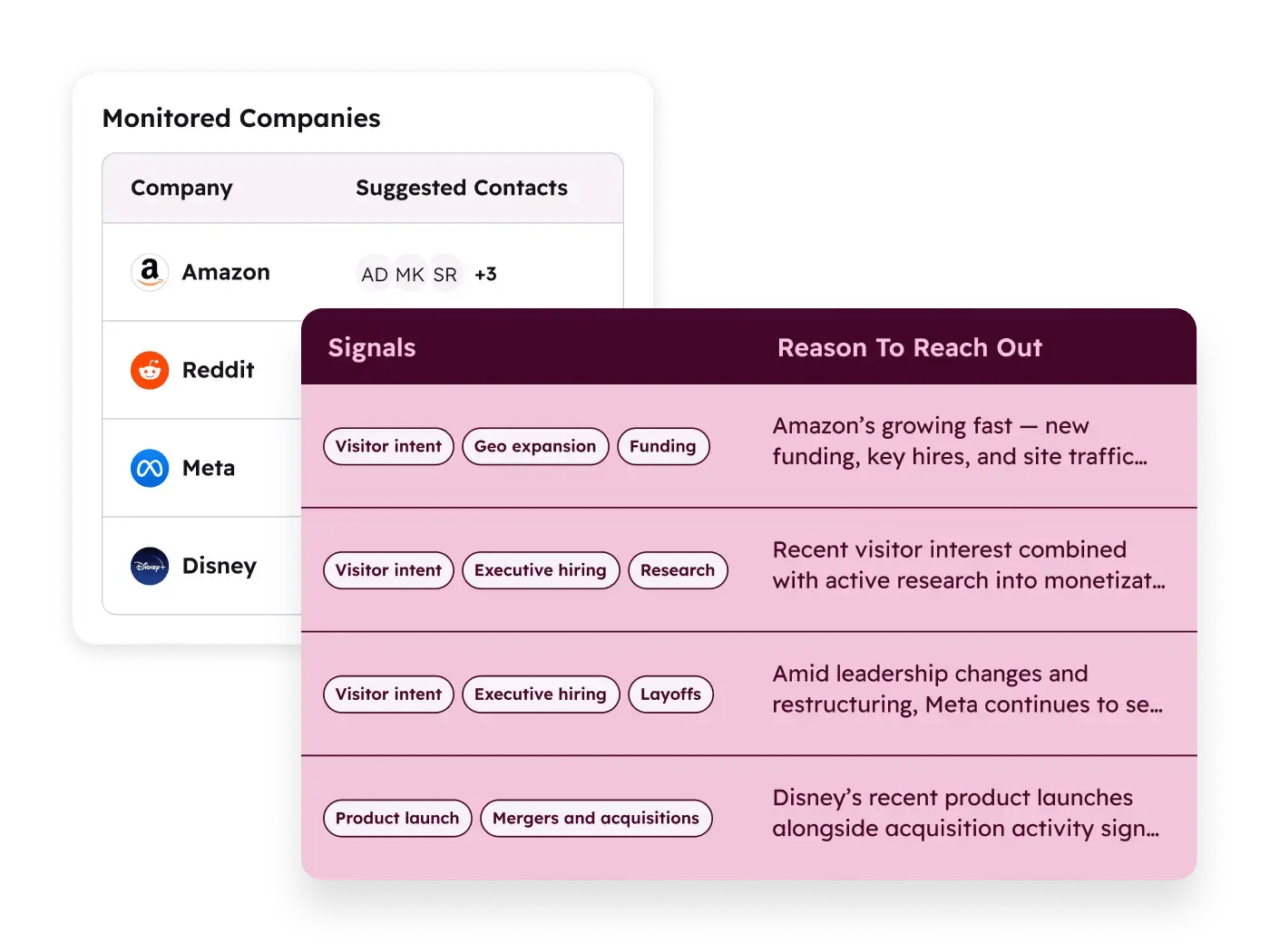
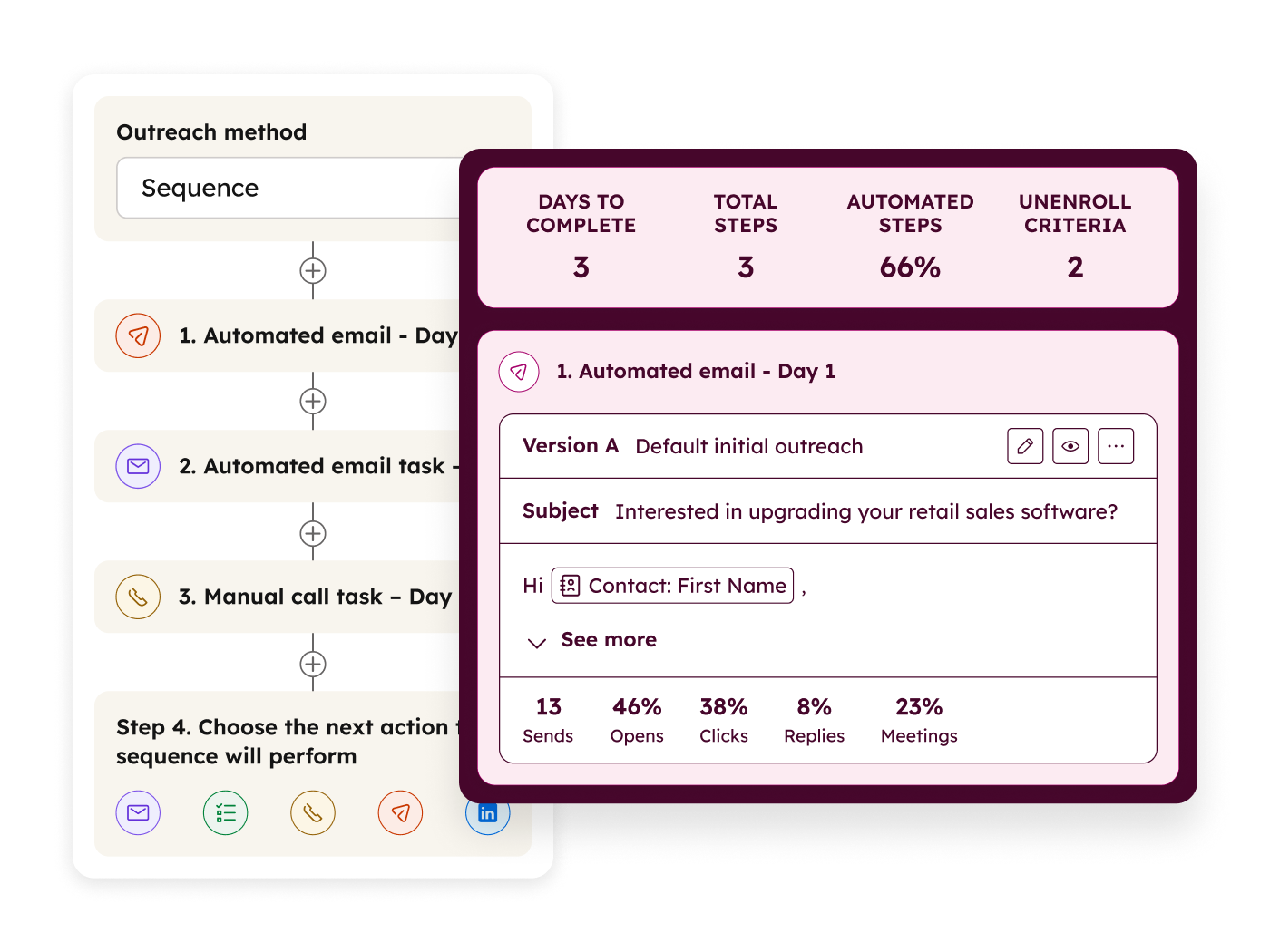
Prospecting Agent continuously monitors for buying signals, helps identify high-value leads, and drafts personalised outreach so reps can focus on closing. Also, this agent monitors prospects for changes such as funding rounds, leadership changes, hiring activity, and other signals that indicate timing may be right for outreach.
Source: HubSpot
That makes Prospecting Agent especially relevant for complex B2B sales environments.
In markets such as biotech, healthcare and enterprise technology, timing matters as much as fit. Teams do not just need a bigger list. They need better reasons to reach out now, with enough context to make the outreach relevant.
A Prospecting Agent is useful because it aims to close the gap between signal, context, and action. The caveat is an important one. This kind of tool works best when the CRM foundation is already sound. If ICP criteria are weak, lifecycle governance is loose, or account data is inconsistent, AI will simply move faster on weaker inputs. The more disciplined the RevOps model, the more useful the Prospecting Agent becomes.
Source: HubSpot
For teams exploring how to apply it in practice, join the upcoming Prospecting Agent: Turning Insight into Action webinar for a more operational look at setup, use cases, and rollout.
Smart Deal Progression
Smart Deal Progression is one of the most practically useful updates in the release (and one of our favourites).
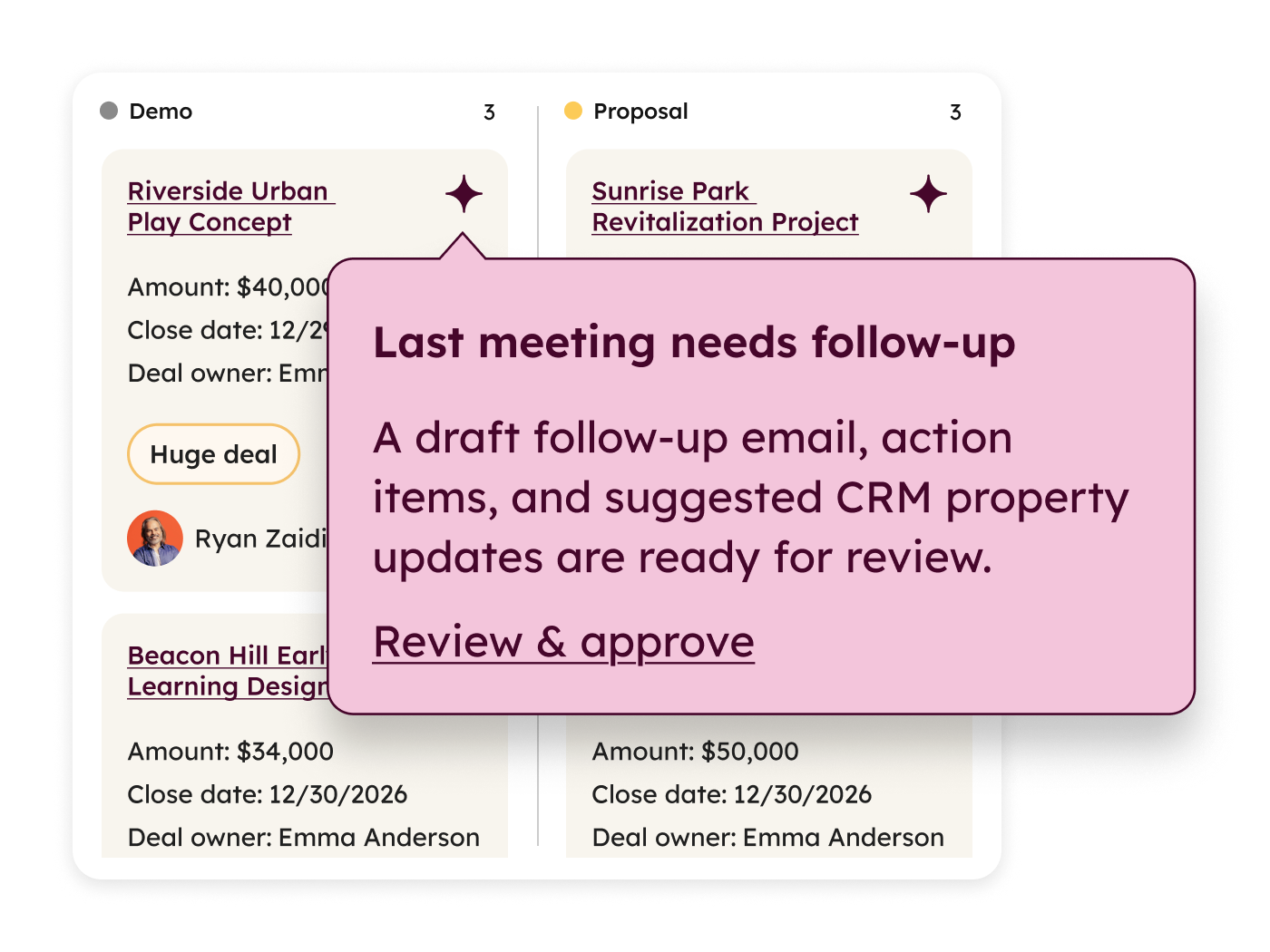
It analyses meeting transcripts and deal context to suggest CRM updates, draft contextual follow-up emails, and surface next steps. It is designed to reduce manual post-meeting admin so reps can keep pipeline data accurate and act quickly while the conversation is still fresh.
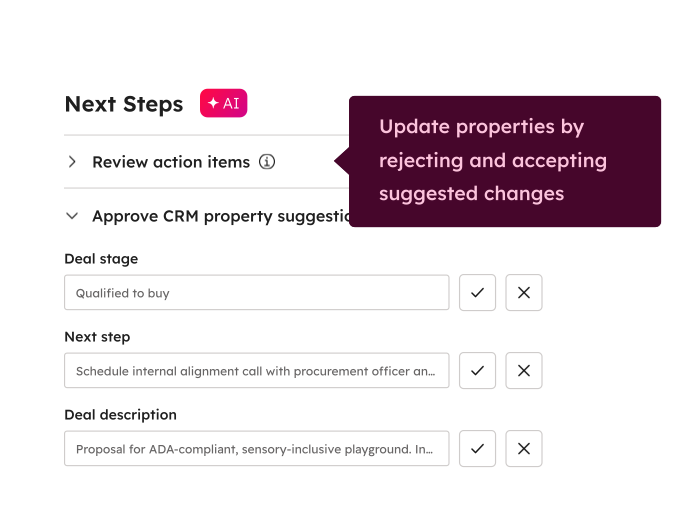 Source: HubSpot
This matters because sales teams rarely lose momentum because of a lack of conversations. They lose momentum because the follow-up gets delayed, the CRM update never happens, or the next step remains informal. In enterprise deals, especially those involving multiple stakeholders, one missed update can weaken forecast accuracy and slow internal coordination.
Smart Deal Progression is compelling because it turns transcripts into operational follow-through rather than just meeting summaries.
Source: HubSpot
For GTM and RevOps leaders, the implementation lesson is straightforward.
Before expecting major value from Smart Deal Progression, tighten stage definitions, next-step standards, forecast logic, and note-taking habits. HubSpot’s own positioning makes clear that the feature depends on deal context and meeting context being meaningful in the first place.
Buying Groups in HubSpot
Buying Groups deserve their own section because they speak directly to how enterprise buying really works.
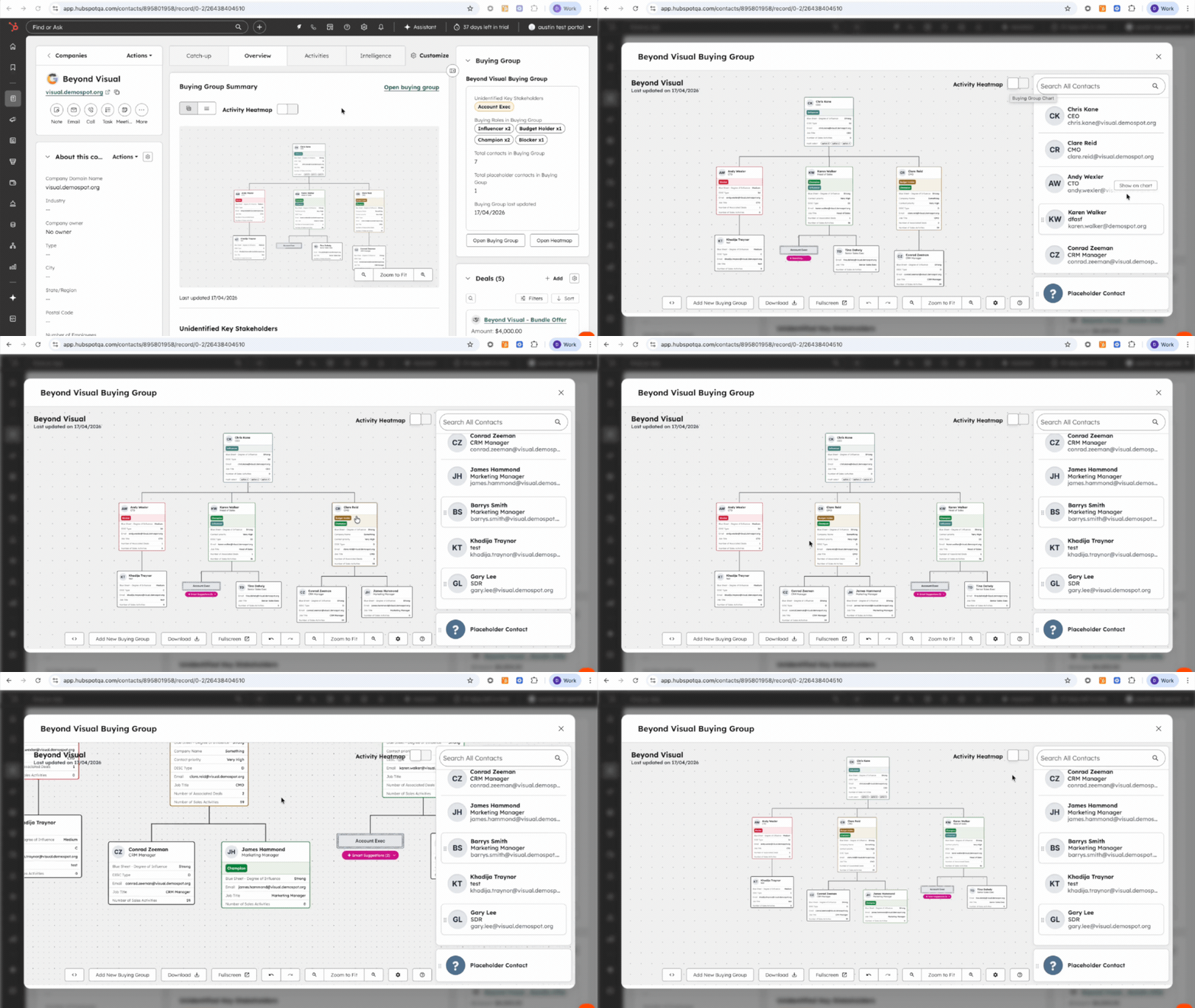
Buying Groups help teams review the key stakeholders at a company, understand each buyer’s role through an org chart, identify missing connections and weak relationships before they become roadblocks, and see how contacts are engaging with the team.
For enterprise GTM teams, this is one of the most strategically useful updates in the sales motion.
Source: HubSpot
Large deals rarely depend on one contact. There is usually a mix of sponsors, evaluators, technical stakeholders, operations leads, procurement, and economic buyers. Buying Groups gives sales and RevOps teams a more structured way to see where a deal is genuinely strong and where it only looks strong because one relationship is carrying too much weight.
That is also where this becomes bigger than sales.
When marketing, sales, and service all understand the buying committee earlier, handoffs improve, onboarding risks surface earlier, and the account picture becomes more realistic across the full journey.
Support scale works best when automation has strong context and clear guardrails
The biggest service story is Customer Agent.
It is the clearest expression of HubSpot’s wider direction, where automation becomes more useful because it is grounded in customer context rather than a thin rules-based chatbot experience.
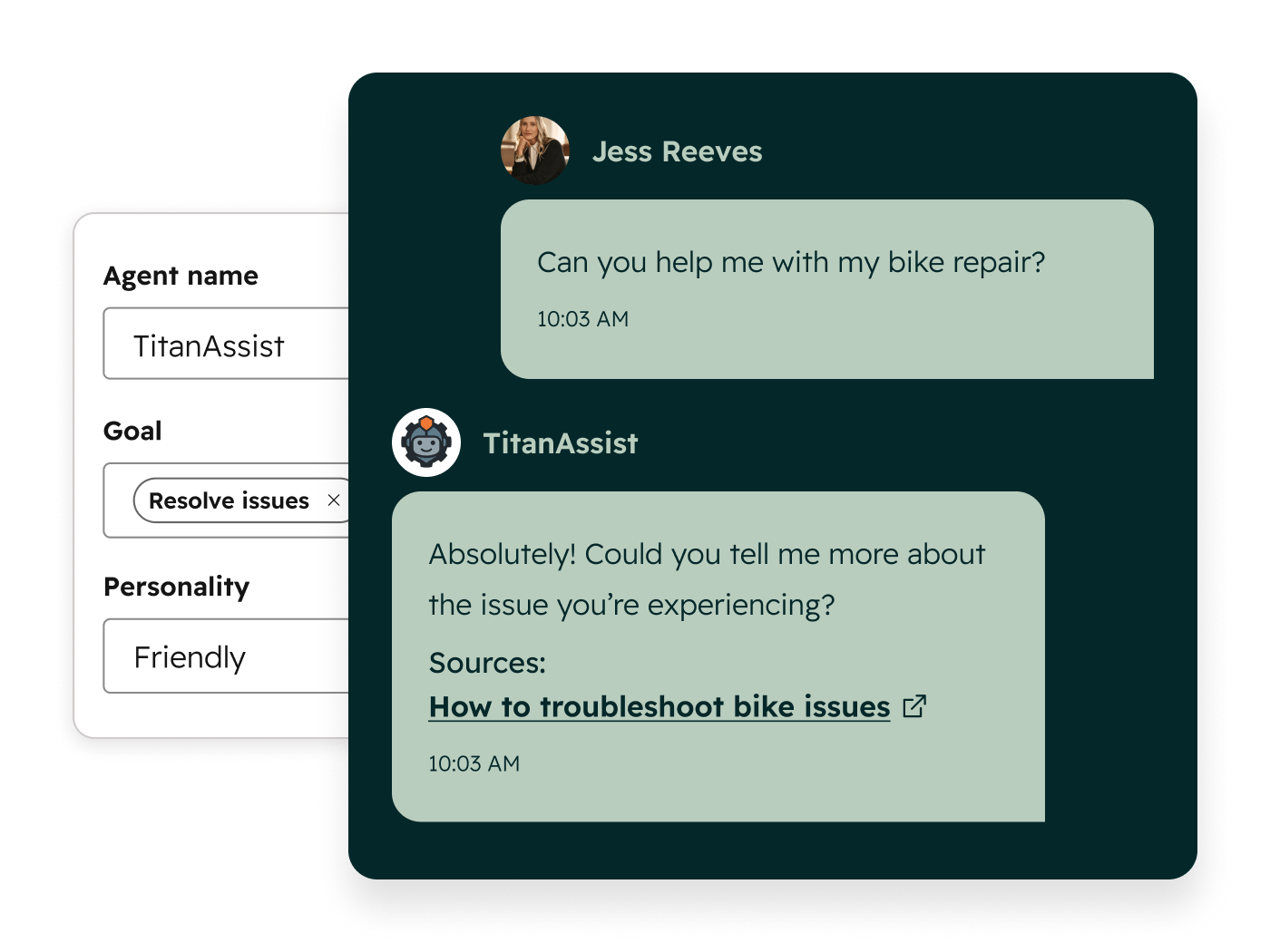
Customer Agent is designed to help teams resolve more tickets by leveraging documentation, customer data, and conversation history, but it can also be set up to support qualification.
It can handle support conversations from start to finish, respond with context drawn from a customer’s history and past conversations, and recognise when a conversation needs to be transferred to a team member.
That is what makes the feature more relevant than a typical support automation story.
 Source: HubSpot
In complex service environments, customers rarely just want a fast answer. They want an answer that reflects their account history, what they have already tried, and how the relationship has developed. In sectors such as healthcare technology, research, complex manufacturing, and high-touch B2B services, that difference matters.
Customer Agent is included in Professional and Enterprise subscriptions and runs on HubSpot Credits. Teams can start quickly, then manage adoption as usage grows through monthly caps, alerts, pause controls, and user permissions. Customer Agent uses 50 credits per resolved conversation, so it is sensible to treat governance as part of the rollout from the beginning.
It can also help teams spot knowledge gaps, which makes it useful not only for handling routine support volume, but for improving the documentation and approved sources behind those answers over time. That turns the agent into part of the feedback loop for service quality, not just a tool for deflection.
That control layer is what service leaders should focus on. The strongest rollout is usually phased: start with routine support questions, define approved sources, choose the channels and time windows carefully, set clear handoff triggers, and expand only when answer quality, escalation logic, and governance are holding up
What GTM leaders should prioritise first
Start with the feature that addresses the clearest operational constraint.
If visibility and demand capture are the pressing issue, AEO is worth serious attention, especially because HubSpot has made it concrete with prompt tracking, citation analysis, and clear recommendations.
If pipeline discipline is the real issue, Smart Deal Progression is the more meaningful release because it deals with the messy gap between conversation and execution.
If the problem is account coverage in complex sales, Buying Groups is a stronger move than most teams will realise at first glance.
And if support scale is starting to strain the team, Customer Agent looks promising precisely as a controlled automation rather than blind automation.
The wider lesson is that HubSpot’s most impactful updates now depend heavily on context. That means data quality, lifecycle governance, record associations, and clean handoffs matter even more than before.
The teams most likely to get value from Spring Spotlight 2026 will not necessarily be the ones that switch on the most AI. They will be the ones that connect marketing, sales, and service around a more disciplined GTM operating model.
FAQ
What is the biggest HubSpot Spring Spotlight 2026 update for GTM teams?
There is no single answer for every business. The most important update depends on the bottleneck. AEO is especially relevant for AI visibility, Smart Deal Progression for sales execution, Prospecting Agent and Buyer Intent for outbound prioritisation, Buying Groups for complex deal coverage, and Customer Agent for scalable support.
What does HubSpot’s agentic customer platform mean in practice?
In practice, it means AI tools can work from the same customer data, business context, and team context as the people using HubSpot. That includes structured CRM records as well as signals from emails, transcripts, tickets, and other interactions, which makes recommendations and automation more relevant to real workflows.
What is HubSpot Prospecting Agent?
Prospecting Agent helps sales teams monitor for buying signals, prioritise accounts, identify useful contacts, and draft personalised outreach using CRM context and connected enrichment sources.
What is Smart Deal Progression in HubSpot?
Smart Deal Progression uses meeting transcripts and deal context to suggest CRM updates, draft follow-up emails, and identify next steps after a conversation so reps can keep deals moving while context is still fresh.
What are Buying Groups in HubSpot?
Buying Groups help teams map the buying committee, understand stakeholder roles, identify missing relationships, and assess account coverage more clearly across complex deals.
What can Customer Agent automate in HubSpot?
Customer Agent can handle routine support conversations, support qualification, use approved knowledge sources, and escalate to a human when needed. Teams can also control channels, active times, communication rules, and handoff triggers as part of rollout.
How should GTM teams prioritise which update to adopt first?
Start with the constraint that is creating the most friction. Visibility issues point to AEO, follow-up and pipeline issues point to Smart Deal Progression, account prioritisation issues point to Prospecting Agent and Buyer Intent, and service scale issues point to Customer Agent.
What foundations should be in place before using these AI features at scale?
Teams will usually get the strongest results when lifecycle stages, associations, ownership rules, reporting logic, knowledge sources, and governance standards are already clear enough for AI to work from reliable context.
Why do these HubSpot AI features depend so heavily on RevOps foundations?
Because the quality of the output depends on the quality of the operating model behind it. Features such as Prospecting Agent, Smart Deal Progression, Buying Groups, and Customer Agent become far more useful when lifecycle stages, ownership rules, associations, knowledge sources, and reporting logic are already clear enough for AI to work from reliable context.